
About this game
Core Gameplay Loop
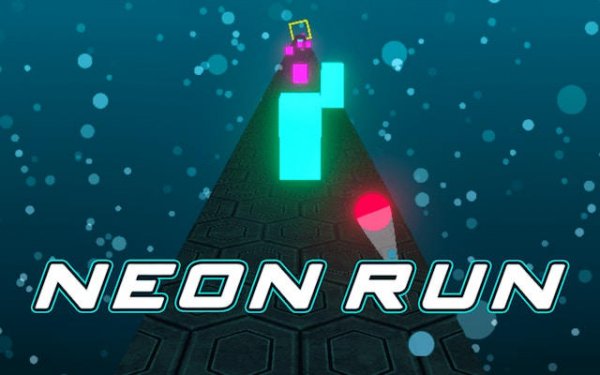
Luminous Trail: Hue Harmony Runner presents a straightforward but challenging concept. A small orb moves along a fixed path automatically. The player's task is to ensure the orb's color aligns with the color of upcoming barriers. This is achieved by switching the orb's hue at the right moment. Successfully passing through a barrier of the same color adds to the player's score. A collision with a barrier of a different color immediately ends the attempt. This core loop of observation, decision, and reaction forms the foundation of the experience.
Visual Design and Atmosphere
The game world is defined by its bright, neon-infused aesthetic. Tracks are outlined in vivid colors against a dark background, creating a strong contrast that makes obstacles easy to identify. The orb itself glows, leaving a subtle trail as it moves. This visual style is not just for show; it serves a functional purpose by making color differentiation clear and immediate. The overall presentation is clean and modern, avoiding visual clutter to keep the player focused on the path ahead.
Difficulty Progression and Challenge
Luminous Trail employs a gradual increase in difficulty to maintain engagement. As the player accumulates points, the speed of the orb increases. This forces the player to make decisions more quickly and to anticipate color patterns further ahead. The challenge comes from the need to balance speed with accuracy. Early runs allow for deliberate timing, but later stages require near-instantaneous reactions. This ramp-up in pace ensures that the game remains stimulating for both new players and those seeking a more intense test of reflexes.
Controls and Accessibility
The control scheme is designed for simplicity and one-handed play. A single tap or click is typically all that is needed to change the orb's color. This makes the game accessible on various devices, including smartphones and tablets, without requiring complex button combinations. The minimal control scheme allows players to focus entirely on the visual cues and timing. This design choice lowers the barrier to entry, making it easy for anyone to start playing immediately while still offering depth for those who master the timing.
Scoring and Replay Value
Scoring is based on the number of successfully matched barriers passed. The game encourages replay by offering a clear metric for improvement: the high score. Players can compete against their own best performance, striving to beat their previous distance and point total. Some versions of the game may include global leaderboards, allowing players to compare their scores with others. This competitive element, combined with the quick session length, creates a strong incentive to try again after a failed run, turning each attempt into a learning experience.





Audience comments
Sign in to comment
You must be logged in before posting a review or rating.
No account? Create one
No comments yet. Be the first to comment!