
About this game
The Drawing Mechanic
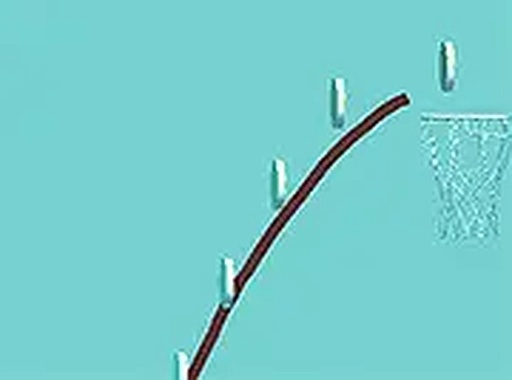
Sketch Shot Basketball Logic replaces standard sports controls with a single creative tool: your mouse. Instead of aiming and releasing a shot, you draw a line from the ball to the hoop. The ball then follows that exact path, so every curve, angle, and endpoint directly determines the outcome. This turns each attempt into a compact puzzle about geometry and timing rather than quick reflexes.
Obstacles and Bounce Planning
Each stage presents a unique arrangement of barriers and moving objects that block a direct route to the basket. Some obstacles are stationary walls, while others shift or rotate, forcing you to adjust your drawn route. The ball can bounce off surfaces, which adds another layer of planning. Before drawing, you need to study the layout and consider how the ball will interact with each element along the way.
Doodle Visuals and Family-Friendly Pace
The game uses simple, doodle-style visuals that keep attention on the puzzle itself. There is no violence or intense action, making it suitable for children and adults alike. The calm pace lets players think without pressure. Each level offers a limited number of attempts, which encourages careful thought rather than random guessing. This design keeps the game accessible to casual players while still offering depth for those who enjoy strategy.
Progression and Difficulty Curve
Early levels introduce basic concepts like straight shots and simple walls. Later stages combine multiple obstacles, moving defenders, and angled bounces. The difficulty increases gradually, giving players time to master the drawing mechanic. Success depends on understanding how the ball moves and how to use the environment. There is no time limit, so you can experiment with different paths until you find a working solution.
Improving Your Drawings
Observe the entire level before making your first line. Notice where obstacles are placed and how they move. Plan a route that uses walls to redirect the ball if a direct line is blocked. Keep your drawn lines smooth and clean to avoid unintended bounces. If your first attempt fails, consider a different angle or a longer path. Practice helps you predict how the ball will behave after hitting surfaces.
Compatibility
FAQ
Audience comments
Sign in to comment
You must be logged in before posting a review or rating.
No comments yet. Be the first to comment!



Editorial Notes