
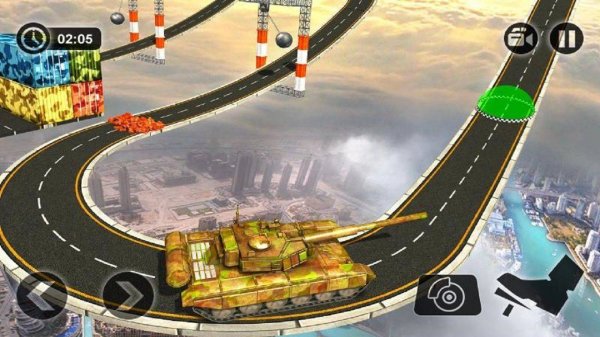
About this game
Vehicle Control & Terrain Response
Each vehicle in this simulation reacts differently to the ground beneath it. Heavier models offer more stability on loose gravel but require more distance to slow down. Lighter vehicles respond quickly to steering inputs but may bounce over larger rocks. The game models traction loss on steep inclines, meaning you must adjust your approach when climbing or descending. Using the accelerator too aggressively on a slippery surface can send the rear end sliding sideways. Braking before a sharp turn helps maintain a predictable line through the curve.
Obstacle Clearing Mechanics
Your vehicle comes equipped with a tool that can push aside or break down barriers blocking the path. Some obstacles, like stacked boulders or reinforced walls, may need multiple activations to fully clear. Positioning your vehicle at the right angle matters: hitting an obstacle head-on works better than scraping against it sideways. The tool has a limited range, so you must drive close enough to the barrier before using it. This adds a layer of planning to each run, as you decide whether to stop and clear a path or find a way around.
Course Layout & Progressive Difficulty
Early tracks introduce simple curves and a few scattered rocks. Later courses combine tight switchbacks with frequent barriers, requiring you to split attention between steering and equipment use. Some sections feature narrow passages where one mistake can leave you wedged against a wall. The game encourages learning each track's layout through repetition, as memorizing where obstacles appear allows for smoother runs. Courses do not change between attempts, so consistent practice leads to better times and fewer errors.
Visual Style & Atmosphere
The 3D graphics depict dusty trails, muddy patches, and rocky outcrops with enough detail to read the terrain ahead. Shadows shift as the sun moves across the sky, and dust kicks up behind the tires when driving on dry surfaces. The camera follows your vehicle from a third-person perspective, giving you a clear view of the wheels and the ground immediately in front. This visual feedback helps judge distances when approaching obstacles or preparing for a turn.
Strategic Driving Approaches
Success in this simulation comes from balancing speed with caution. Rushing through a section often leads to losing control on uneven ground or missing an obstacle that requires clearing. Taking a slower, deliberate pace lets you conserve equipment charges for sections where they are truly needed. On some tracks, a small detour around a barrier may be faster than stopping to remove it. Learning when to push the accelerator and when to ease off is the key to consistent progress.
Audience comments
Sign in to comment
You must be logged in before posting a review or rating.
No account? Create one
No comments yet. Be the first to comment!